
What Do Candidate Grades Mean | All candidates were assessed based on a variety of factors related to their support for LGBTQ+ equality and inclusion, including their legislative records (if they have previously held office), overall career track records, public statements, campaign platforms and other accomplishments.
Judicial candidates were evaluated with the additional criteria of their rulings, independence from partisan politics and the consistency of their judicial philosophy.
How to Interpret Letter Grades:
A+ | Champion of equality: Sustained, strong record of support for LGBTQ+ Ohioans
A | Strong record of support for LGBTQ+ Ohioans
B | Mostly strong record or insufficient record but supportive public statements
C | Mixed record or no record and no public statements
D | Mostly poor record or no record and public statements opposing LGBTQ+ equality
F | Sustained, poor record opposing LGBTQ+ equality
U.S. Senator
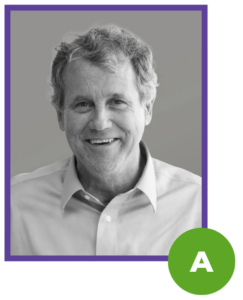
SHERROD BROWN
He voted against the Defense of Marriage Act in 1996 and was a staunch advocate for the Equality Act.
He has long supported legislation to expand nondiscrimination protections and defend marriage equality and civil rights for all.
In his current campaign, he has publicly voiced support for equality for all Ohioans.
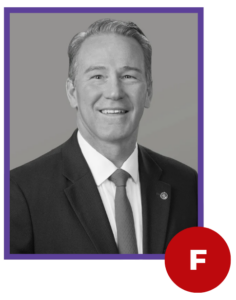
JON HUSTED
He has a longstanding record opposing LGBTQ+ equality, including previously voting to ban same-sex marriage.
He criticized Governor DeWine’s veto of legislation banning gender-affirming care for transgender minors.
He championed HB 8, Ohio’s “Don’t Say Gay/Trans” law.
Ohio Governor
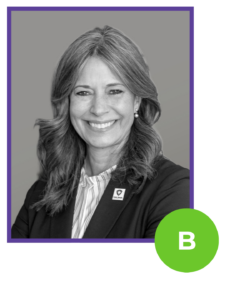
AMY ACTON
She has voiced support for reproductive freedom, public education, and workers’ and union rights.
Her campaign wrote to the press that she, “will always stand up for Ohioans, including the LGBT community. As governor, she is committed to standing up to discrimination and ensuring all Ohioans receive equal protection under the law.”
Following a remark on June 30, 2026, her grade changed from “A” to “B”, reflecting unresolved concerns about support for trans Ohioans.
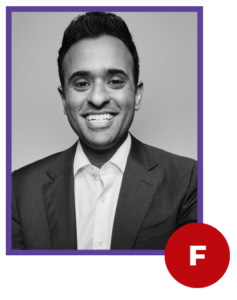
VIVEK RAMASWAMY
He supports bans on gender-affirming care and has referred to transgender identity as a “mental health disorder.”
He has characterized the broader LGBTQ+ movement as “cult-like” and aligned himself with national culture war messaging targeting LGBTQ+ inclusion.
He has criticized diversity, equity, and inclusion initiatives and supports restrictions on reproductive healthcare access.
Ohio Secretary of State
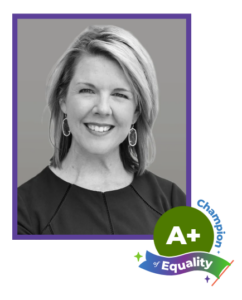
ALLISON RUSSO
She is a leading advocate, voting against HB 8, Ohio’s “Don’t Say Gay/Trans” law.
She has consistently supported policies promoting LGBTQ+ equality, inclusion, and personal freedom throughout her time in the legislature including co-sponsoring the Ohio Fairness Act and Conversion Therapy Ban.
She advocated against Issue 1 in 2024, which would have required a supermajority vote for future citizen-led ballot initiatives.
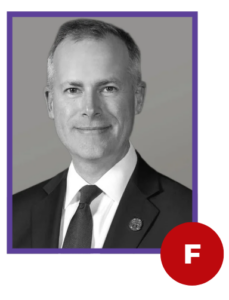
ROBERT SPRAGUE
While in the legislature, he voted for the Ohio Pastor Protection Act, allowing clergy and religious organizations to refuse to solemnize same-sex marriages or to use their property for those ceremonies.
He has publicly stated that marriage is “between one man and one woman” and disagreed with the Supreme Court when it struck down the Defense of Marriage Act.
He has publicly stated that affirming trans youth is child abuse.
He has emphasized restricting voter access by expanding photo-ID requirements and eliminating ballot drop boxes.
Ohio Attorney General
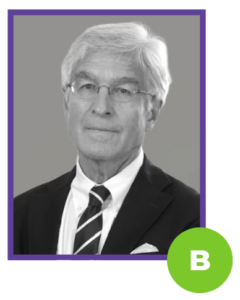
JOHN KULEWICZ
While on Upper Arlington City Council, he voted for nondiscrimination protections for LGBTQ+ residents in housing, public accommodations, and employment.
He publicly supports civil rights protections for LGBTQ+ Ohioans.
He brings 44 years of legal experience, including arguing cases before the U.S. Supreme Court and courts across Ohio.
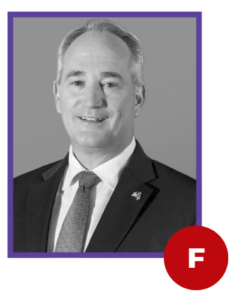
KEITH FABER
His voted for Ohio’s 2004 Defense of Marriage Act, which prohibited the recognition of same-sex marriages and reduced protections for LGBTQ+ Ohioans in nonmarital relationships.
He voted for the Ohio Pastor Protection Act, allowing clergy and religious organizations to refuse to solemnize same-sex marriages or to use their property for those ceremonies.
Ohio Supreme Court
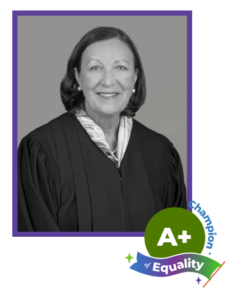
JENNIFER BRUNNER
She dissented when the Court allowed enforcement of Ohio’s ban on gender-affirming care.
She has consistently defended individual liberties and equal protection under the law.
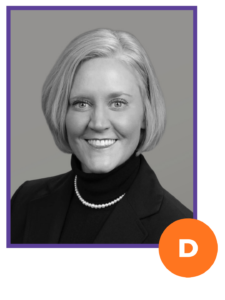
COLLEEN O’DONNELL
She has not established a public history of advocating for LGBTQ+ rights or civil rights protections.
Her record reflects a consistently more conservative judicial approach.
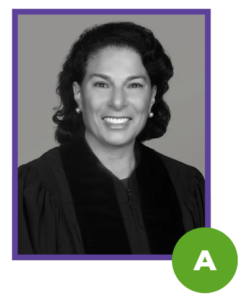
MARILYN ZAYAS
Her demonstrated commitment to fairness, equal access to the courts, and impartial application of the law earns her high marks on equality.
She authored the unanimous First District Court of Appeals opinion affirming a same-sex couple’s right to receive the same legal benefits associated with marriage.
She was appointed three times within a 40-day span by Ohio’s Chief Justice to sit on the Ohio Supreme Court, an uncommon distinction that underscores her expertise and the respect she has earned across the judiciary.
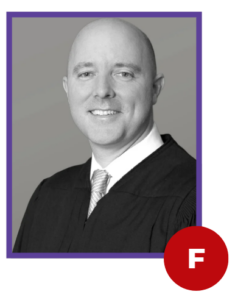
DAN HAWKINS
He joined the Court’s majority allowing enforcement of Ohio’s ban on gender-affirming care for transgender minors to proceed.
He joined the Court’s majority in overturning the First District Court of Appeals decision which affirmed a same-sex couple’s right to receive the same legal benefits associated with marriage.
His broader record includes limited direct commentary on LGBTQ+ issues.
Additional Nonpartisan Voter Resources
- Visit Vote411.org to get a full list of the races and issues on your ballot this year.
- If you have questions about voting rights or have difficulty casting your ballot, call the nonpartisan Election Protection Hotline at 1-866-OUR-VOTE (1-866-687-8683)